Month: June 2025

Emerging managers: what it takes | Kim Pochon, Unigestion & Joe Briggs, BCF | Ep 74

Ross Butler speaks with Kim Pochon, Global Head of Primary Investments at Unigestion, and Joe Briggs, Founder of BCF for this launch episode of Fund Shack’s Emerging Manager Series.

What drives experienced professionals to leave established firms and launch new platforms? How do LPs assess the viability of emerging teams? And why the earliest decisions—on team structure, alignment, and strategy—can determine long-term success or failure.

Why “Emerging Manager” Is a Misnomer
Most “emerging managers” are highly experienced professionals. They are not new to investing, but new to firm-building. And while the term may not resonate with GPs themselves, it has real weight in the LP ecosystem, where it defines eligibility for dedicated programs and mandates.

Why LPs Value Early Access
Backing a first-time fund is not just about returns; it’s about relevance and franchise value. Early LPs often benefit from enhanced access, strong alignment, and deep relationships that persist long after the first fund closes. In many cases, Unigestion now co-invests or partners with these managers on continuation vehicles and secondaries—a long-term payoff for early conviction.

The Rise of Independent Sponsors and Hybrid Models
The deal-by-deal model—often called independent sponsorship—has flourished as a path to proof for aspiring GPs. Especially in Europe, emerging teams start with individual transactions, then evolve into structured vehicles. Joe Briggs highlights the growing hybrid space: mini-funds and “short-duration funds” that offer speed, alignment, and stepwise scalability before raising an institutional flagship.

Team Dynamics: The Make-or-Break Factor
The biggest risk in early-stage private equity isn’t deal flow—it’s the people. Joe and Kim stress that LPs are not just investing in a strategy, but a partnership. Decision-making processes, equity splits, and even how teams handle setbacks are all scrutinised.

Culture, Conviction, and the Push to Spin Out
So why do seasoned professionals walk away from high-paying roles? You’ll have to watch to find out…

Know Your Why
The most compelling emerging managers are those who can clearly articulate the value they bring—not just for themselves, but for LPs. As Briggs puts it, emerging GPs must “know why they deserve to exist.” That clarity, combined with operational discipline, is what separates scalable franchises from short-lived experiments.


About Fund Shack:
Fund Shack is a private equity podcast and global media channel for alternative investment professionals. Fund Shack is produced by Linear B Group.

Contact:
Katie Mitchell
Email: katie@linearb.media
Company: Linear B Group

Hashtags: #PrivateMarkets #PrivateEquity #PrivateCredit #Emergingmanagers


About Ross Butler

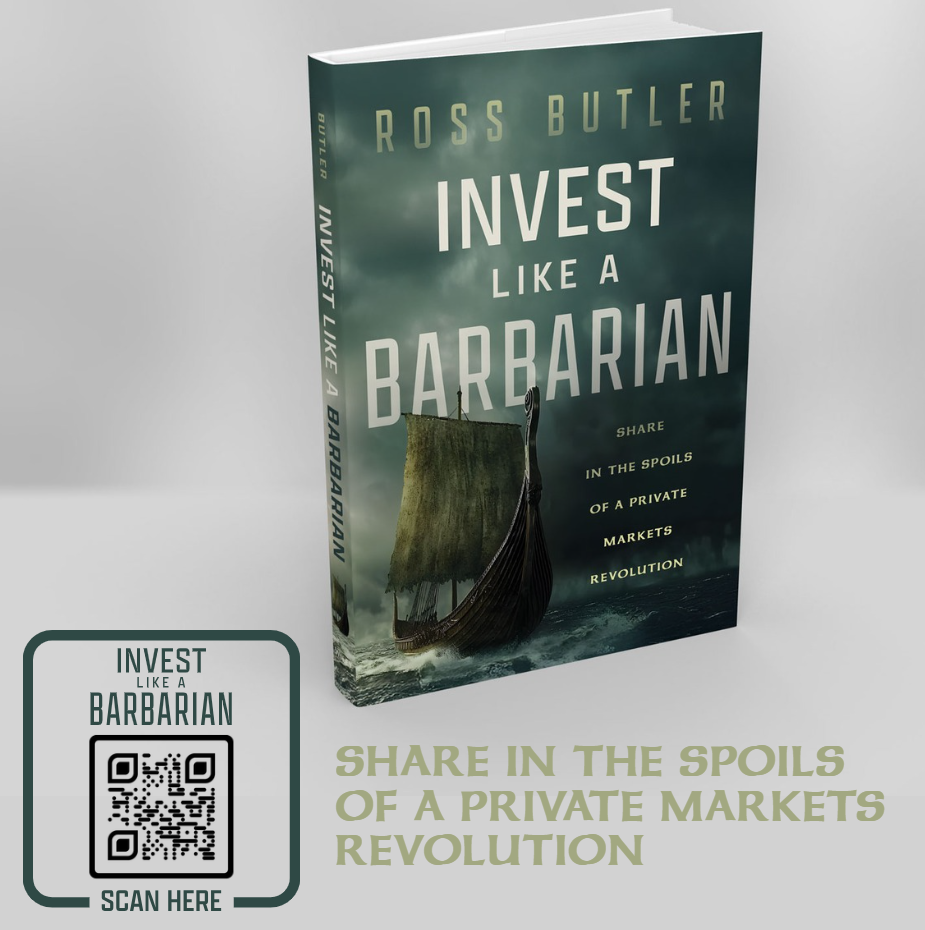
Ross Butler is the host of Fund Shack and the author of Invest Line A Barbarian: Share in the Spoils of a Private Markets Revolution.

He has spent more than 25 years working across private capital as a journalist, policy adviser and consultant. His previous roles include Editor of Real Deals, Secretary of the EVCA Professional Standards Committee and Director of the Listed Private Capital Association.

Connect on LinkedIn

Amazon LINK

Follow Fund Shack


How Goldman channels private markets to wealth | Kyle D Kniffen | Ep 73

In this Fund Shack episode, recorded at SuperReturn in Berlin, Ross Butler talks with Kyle D. Kniffen, Managing Director and Global Head of Alternatives for Third Party Wealth at Goldman Sachs Asset Management.

With over $500 billion in alternative assets under management and nearly four decades of experience, Kyle discusses the firm’s expansive platform, which spans direct investing and open-architecture manager selection across private equity, private credit, infrastructure, hedge funds, and more. This dual capability allows Goldman Sachs to provide flexible, multi-asset solutions tailored to wealth intermediaries seeking access to institutional-grade strategies.

Private Markets Are Now Mainstream – Even for Wealth

Kyle outlines the structural changes that have brought private markets to the centre of modern portfolio construction. The number of public companies has declined sharply, while private companies are staying private longer. Innovation in sectors like healthcare and AI increasingly happens outside public markets, making private equity and private credit essential exposures.

Goldman Sachs is responding to this shift with innovative fund structures that reduce complexity and broaden access.

Why Wealth Clients Are Underallocated – And How That Changes

Kyle estimates that global individual investors hold just 5% of their portfolios in alternatives, versus 20-30% for institutions. The education gap is significant, and Goldman Sachs is investing heavily in curriculum-like frameworks to support wealth managers and their clients through this transition.

Evergreen Alternatives: A New Era of Product Design

Kyle explores the trade-offs between traditional drawdown vehicles and new evergreen formats. While evergreen funds offer reduced complexity and optional liquidity, they introduce duration management challenges. Goldman mitigates this by integrating secondary strategies and maintaining a high bar for product design.

The discussion also highlights how private credit’s liquidity characteristics make it especially well-suited to evergreen formats. However, Goldman applies the same innovation to private equity, infrastructure, and real assets, combining directs and secondaries to reduce duration risk while preserving exposure.

Risk, Returns, and Manager Alignment

Risk management remains a priority, with diversification across and within asset classes. Kyle stresses alignment: Goldman Sachs’ own balance sheet and employee capital are significantly invested alongside clients. The firm takes transparency and reporting seriously, delivering post-sale support that includes events, frequent updates, and tailored communications.

Private Wealth Is Still Early in the Journey

According to Kyle, private wealth is at the earliest stage of its alternatives adoption curve. That presents an enormous opportunity for managers who can deliver not just investment performance, but a high standard of care, education, and partnership. As alternative investments become more foundational to long-term portfolio outcomes, Goldman Sachs is positioning itself as a trusted guide through the complexity.


Thank you to our episode partner, Edelman Smithfield, a specialist Public Relations and Communications consultancy for the financial markets. Their deep expertise in Private Capital spans fundraising, portfolio company communications, strategic positioning, and reputation management. 

Learn more at www.edelmansmithfield.com


Contact Information:

About Fund Shack:
Fund Shack is a private equity podcast and global media channel for alternative investment professionals. Fund Shack is produced by Linear B Group.

Contact:
Katie Mitchell
Email: katie@linearb.media
Company: Linear B Group

Hashtags: #PrivateMarkets #PrivateEquity #PrivateCredit #EvergreenFunds #WealthManagement #GoldmanSachs #AlternativeInvestments #PortfolioConstruction #FundShackPodcast #SuperReturn #Secondaries #InvestorEducation


About Ross Butler

Ross Butler is the host of Fund Shack and the author of Invest Line A Barbarian: Share in the Spoils of a Private Markets Revolution.

He has spent more than 25 years working across private capital as a journalist, policy adviser and consultant. His previous roles include Editor of Real Deals, Secretary of the EVCA Professional Standards Committee and Director of the Listed Private Capital Association.

Connect on LinkedIn

Amazon LINK


Follow Fund Shack