Selecting private equity funds is essential. Reliably predicting which established institutional fund will outperform is a different proposition, argues John Renkema, Partner and Head of Private Markets at Avida International and a 24-year veteran of APG.
In Fund Shack episode #92, he joins Ross Butler to explain why diversification, commitment pacing and well-aligned manager relationships belong at the centre of private equity portfolio construction.
Key takeaways
- Fund selection is not the same as forecasting outperformance. Access, negotiated terms and portfolio fit remain essential, even when future relative returns are difficult to predict.
- Diversification has a time dimension. John argues for consistent commitments across vintages, supported by the liquidity to keep investing through difficult markets.
- Governance is part of the investment case. He sees committed capital, sector expertise and the capacity to change businesses as advantages of private equity ownership.
- Continuation funds require more than a liquidity decision. New terms, fees and negotiating arrangements complicate the existing LP’s choice to sell or roll.
- A constructive relationship still needs professional distance. Shared investment goals do not remove the need to challenge a GP or scrutinise its incentives.
Does private equity fund selection still matter?
Yes. Fund selection remains essential for access, negotiated terms and portfolio fit. John’s challenge to the concept is narrower: whether LPs can reliably predict which established institutional private equity fund will outperform comparable funds over the next ten to twenty years.
His argument concerns a mature market in which many managers have experienced investment teams and sophisticated institutional backers. Each group of LPs may believe it has selected a future outperformer. That conviction, he argues, is not evidence that the selection process can consistently deliver superior relative returns.
The conclusion is not to invest indiscriminately. It is to distinguish choosing funds for a coherent portfolio from claiming to know which credible manager will beat the others.
How should LPs build a private equity portfolio?
John’s framework starts with the purpose of the allocation, not a list of favoured managers. An institution seeking different exposures within its wider portfolio may need a different strategy mix from one primarily seeking to outperform listed equities or meet an impact objective.
That purpose should guide diversification across sectors, regions and fund strategies. It also needs to be considered alongside the institution’s size and its capacity to implement the programme.
Why does commitment pacing matter?
Commitment pacing helps an LP diversify across successive vintage years rather than concentrate its programme in particular market conditions. John argues that the programme should also preserve the ability to make new commitments when liquidity becomes scarce.
The concern is not simply missing a year. In his view, periods of scarce liquidity can produce particularly attractive vintages. An investor that cannot commit during those periods may miss opportunities precisely when it most wants to maintain its exposure.
The implication for LPs is practical: liquidity planning supports the investment strategy itself. It helps determine whether the institution can sustain its intended programme through a difficult market, rather than allow the availability of cash to dictate its vintage exposure.
Which fund terms should LPs scrutinise?
John puts alignment of interests at the centre of fund negotiations: who receives the rewards, what other incentives the GP has and whether the investment mandate keeps the manager focused on the job the LP has hired it to do.
Fees matter, but the headline fee is only part of the picture. A carried-interest arrangement deserves scrutiny where a large share flows to senior figures or shareholders who are not closely involved in the investments. The question is whether the people doing the work are appropriately incentivised.
John also highlights arrangements that allow a GP to invest through different entities or earn other income from portfolio companies. These can introduce competing incentives that need to be understood.
Finally, there is the mandate itself. An LP committing to a blind pool on the strength of a manager’s sector expertise does not necessarily want that manager moving into unrelated areas. Fund terms help connect the investment proposition to what the GP is permitted to do.
Why does “sell or roll” leave continuation-fund conflicts unresolved?
A choice about liquidity does not settle every question about price, fees, terms or negotiating power. In the continuation-fund transactions John Renkema describes, an existing LP may be offered the choice to sell or roll into a new vehicle, while the GP and an incoming secondary investor determine the new arrangements.
The rollover decision can therefore be more complicated than deciding whether to remain invested in a company. The new vehicle may have different fees, revised contractual terms and additional capital available for investment. An LP can like the asset without finding the proposed investment terms acceptable.
This is John’s central objection to treating the binary choice as a complete answer to conflicts: having a choice is not the same as helping to shape the choices available.
He also distinguishes a continuation transaction from a conventional exit. In his account, the latter gave the GP a clearer objective: achieve the best sale price. A continuation transaction involves negotiations about an ongoing investment relationship as well. Running a competitive process does not necessarily leave the existing LP choosing between competing final offers.
Does John think continuation funds are necessarily harmful?
No. His concerns about conflicts do not lead him to a blanket rejection of the structure. At the time of the interview, he says the major problems he previously feared had not emerged to the extent he expected. He also recognises that the need to find a buyer willing to commit capital introduces a degree of discipline.
His conclusion remains provisional: “the jury is still out”.
For the manager’s perspective, explore Flor Kassai of Inflexion on value creation and continuation funds.
How should LPs think about private equity risk?
John Renkema cautions against treating observable historical volatility as a reliable guide to future risk. Public-market prices make past fluctuations easier to measure; they do not establish how the same assets will behave in the future. Private equity’s less observable volatility presents a measurement challenge, not an absence of risk.
He acknowledges that parts of the buyout market can be closely correlated with listed equities and that additional leverage may increase volatility. His governance argument therefore sits alongside equity risk, not in place of it.
He returns to diversification as a means of improving the portfolio’s risk-adjusted outcome. The distinction is between organising exposure more effectively and assuming that a private ownership structure makes the underlying uncertainty disappear.
For the related liquidity discussion, read Alex Branton of Nodem Capital on NAV lending, secondaries and private markets liquidity.
Are LPs partners or clients of private equity managers?
“I think we’re clients.”
John Renkema, Fund Shack episode #92, 33:11.
For John, the distinction is about the working relationship. The parties share an interest in the fund’s success, but they do not perform the same role. The GP manages the fund; the LP pays for that service through management fees and carried interest. Potential conflicts remain, making professional distance important.
That does not mean keeping managers at arm’s length. When problems arise, a good working relationship should make it easier to speak openly. John expects GPs to disclose difficulties, explain their intended response and involve LPs where conflicts need handling. LPs should be equally clear about what they expect and why.
A reputation for treating investors well can help a GP retain support through weaker performance, particularly when the manager explains what went wrong. John is also clear that goodwill has limits: persistent underdelivery makes the next fundraise harder.
He recalls initially assuming that private equity would be straightforward after working with options and complex liquid instruments. Cash in, cash out. The longer education was understanding how the LP–GP relationship and alignment of interests behave across investment cycles.
Being a good LP is an investment discipline in its own right.
Who is John Renkema?
John Renkema is Partner and Head of Private Markets at Avida International. He spent 24 years at APG, where he managed a global private equity portfolio. His work at Avida focuses on independent advice to limited partners, particularly around the strategy and governance of private markets programmes.
Visit Avida International or connect with John Renkema on LinkedIn.
About Ross Butler
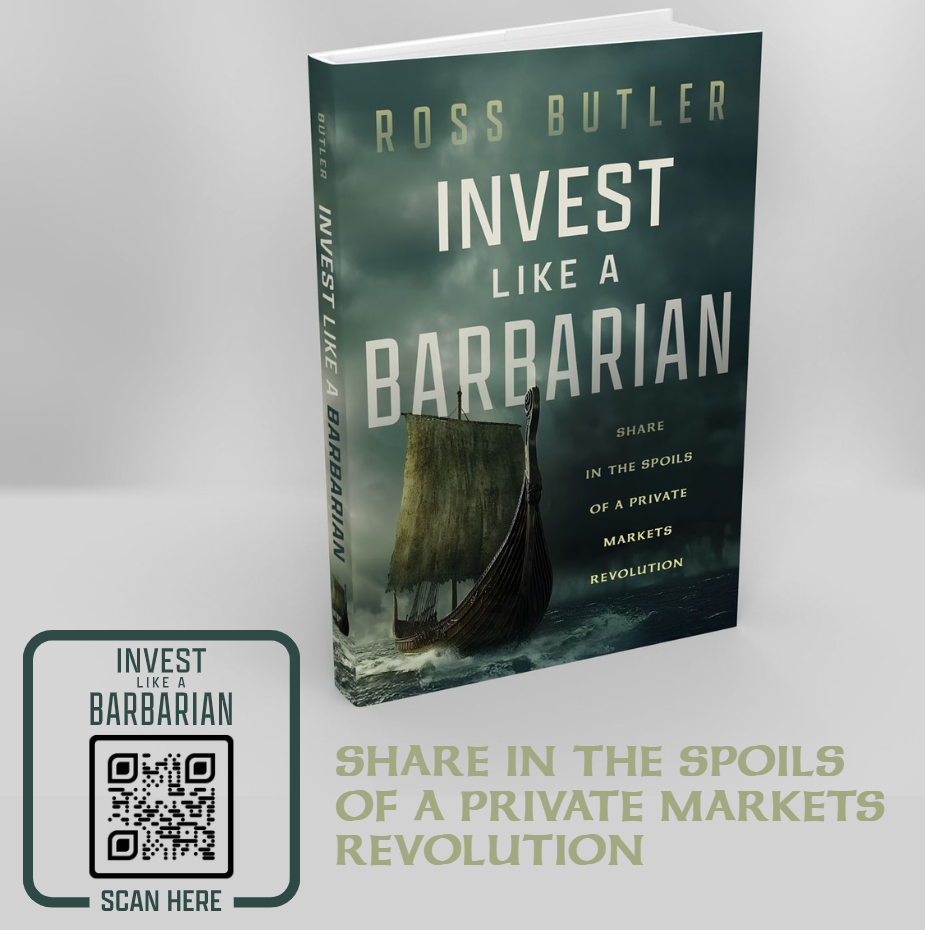
Ross Butler is the host of Fund Shack and the author of Invest Line A Barbarian: Share in the Spoils of a Private Markets Revolution.
He has spent more than 25 years working across private capital as a journalist, policy adviser and consultant. His previous roles include Editor of Real Deals, Secretary of the EVCA Professional Standards Committee and Director of the Listed Private Capital Association.
Connect on LinkedIn
Amazon LINK
Follow Fund Shack