Why LPs are reassessing managers, sectors and the evidence behind private equity returns.
An original Fund Shack discussion by Ross Butler
Private equity’s difficult fundraising market is not simply a shortage of cash, argues Adam Turtle, co-founder of Rede Partners. In this conversation with Ross Butler, he explains why institutional investors are reconsidering which managers, sectors and strategies they want to back, even while some funds continue to raise capital at remarkable speed. The discussion examines what this reassessment means for LPs, GPs and the relationships that sustain private equity firms.
Key takeaways
- The fundraising slowdown is not one uniform capital squeeze. Adam sees investors reassessing their portfolios and managers, rather than simply withdrawing from private equity.
- DPI is evidence as well as liquidity. Investors want distributions to demonstrate that a manager’s strategy and valuations can translate into cash returns.
- A difficult market does not necessarily favour the biggest firms. Adam sees renewed interest in smaller and middle-market funds, where investors hope to find less efficient opportunities.
- Fundraising is a two-way selection process. GPs need investors whose preferences, capacity and long-term ambitions fit their own.
- The next fund cannot be taken for granted. Adam expects a market in which some managers raise quickly, others struggle through lengthy processes and some fail to raise again.
What is driving the private equity pivot?
LPs are questioning some of the sector preferences that shaped their portfolios over the previous decade, including the appeal of software, technology-enabled services and healthcare. At the same time, they are examining the performance of managers whose funds invested during the Covid-era market.
Artificial intelligence adds another complication. Investors are considering which businesses are resilient to disruption, while managers must demonstrate how they can use AI to improve the companies they own. Adam also identifies defence as an area attracting new strategies and capabilities.
“What made sense for the last 15 years may not make sense for the next 15 years.”
In that case, what’s with the DPI narrative?
DPI, or distributions to paid-in capital, measures how much a fund has returned relative to the capital investors have contributed. In Adam’s account, the demand for distributions is about more than replenishing investment budgets.
Cash returned to investors provides evidence that an investment strategy has worked and that reported asset values can be realised. That matters when LPs are deciding whether to support the next fund.
So the familiar explanation that disappointing distributions must mean the industry has simply run short of capital is deficient. Some investors face allocation constraints, but others have room to commit and are asking for stronger proof.
The distinction is between needing the money back and needing confidence in the manager before putting more money in.
Who can still raise capital in a difficult market?
Adam reckons there’s a three-speed fundraising market.
A relatively small group of highly sought-after managers can raise fast – even faster than usual.
Many others face a much longer process, requiring sustained relationship-building and sometimes a combination of primary commitments, co-investments and secondary transactions.
A third group may not raise another fund at all.
Existing investors remain central. When they stop supporting a manager, the consequences can extend beyond the fundraising process: people leave, organisational confidence weakens and the next fund becomes still harder to raise.
But winning does not necessarily mean being the largest. Adam sees interest shifting towards smaller and middle-market strategies where investors believe there is greater scope to exploit inefficiencies.
When should a GP turn down an investor?
A large commitment can solve today’s fundraising problem while creating tomorrow’s strategic disagreement.
Rede’s objective, Adam explains, is to source enduring capital: investors who can remain supportive as the manager develops. This also means considering concentration within the investor base. A portfolio of otherwise attractive LPs can leave a GP exposed if too many share the same geography, funding pressures or investment preferences.
The question is not whether an LP is good or bad. It is whether the relationship makes sense for both sides over more than one fundraising cycle.
How does Rede decide which managers to represent?
Before an LP selects a fund, a fundraising adviser has already decided whether to represent it.
Adam thinks of this as another layer of screening, seeking established managers of high quality alongside newer propositions that investors may not yet have considered.
He draws a distinction between believing a fund can be raised and believing the manager deserves backing. Adam says Rede invests in the funds it raises, making willingness to commit its own capital part of the discussion.
The intended relationship is also longer term than a single successful close. Rede wants to work with managers through successive funds and changes in their businesses.
Would higher hurdle rates improve alignment?
A higher hurdle rate can sound like an obvious improvement for investors. Adam’s concern is what happens when carried interest becomes too difficult to earn.
Discussing a proposed increase to a 12% hurdle, he argues that carry is one of the most powerful mechanisms connecting a manager’s rewards to investment performance. If it moves out of reach, LPs may face a different incentive problem, including a greater emphasis on retaining management fees.
His argument is not that investors should accept weak returns. It is that a fund’s economic terms need to preserve a meaningful incentive to improve outcomes when conditions are difficult, as well as distribute rewards when conditions are favourable.
Why does fundraising advice go beyond investor introductions?
Adam describes Rede’s growth as a response to its clients’ changing needs. As managers develop their own investor relations capabilities, an adviser has to offer more than access to the same familiar institutions.
That can mean relationships in additional regions, strategic advice on the development of the firm, or a clearer explanation of what makes its investment proposition distinctive. He also emphasises the culture required to deliver that work: individual standards combined with collaboration across a global team.
For Adam, the modern fundraising adviser combines investor coverage with the judgement and communication skills needed to help establish that confidence
About Adam Turtle
Adam Turtle is Co-founder, Senior Partner and Global Head of Advisory at Rede Partners. Rede is an independent private markets advisory firm working across primary fundraising, capital solutions and strategic advice. In this interview, Adam draws on its relationships with fund managers and institutional investors to explain how fundraising decisions connect with the long-term development of a private equity business. Rede Partners
EPISODE PARTNER: SRS ACQUIOM
Thank you to our Episode Partner, SRS Acquiom. SRS Acquiom provides a comprehensive platform to help manage merger and acquisition transactions and bilateral and syndicated loan facilities.
Visit: https://www.srsacquiom.com/eu/
About Ross Butler
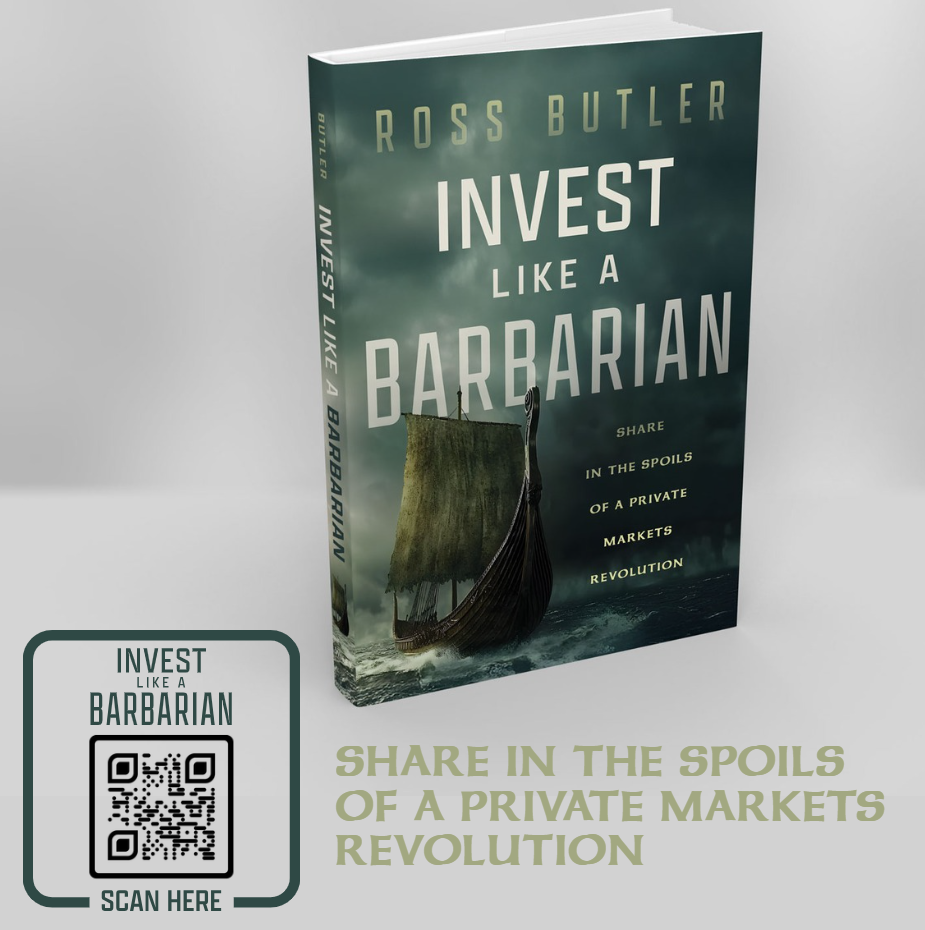
Ross Butler is the host of Fund Shack and the author of Invest Line A Barbarian: Share in the Spoils of a Private Markets Revolution.
He has spent more than 25 years working across private capital as a journalist, policy adviser and consultant. His previous roles include Editor of Real Deals, Secretary of the EVCA Professional Standards Committee and Director of the Listed Private Capital Association.
Connect on LinkedIn
Amazon LINK
Follow Fund Shack